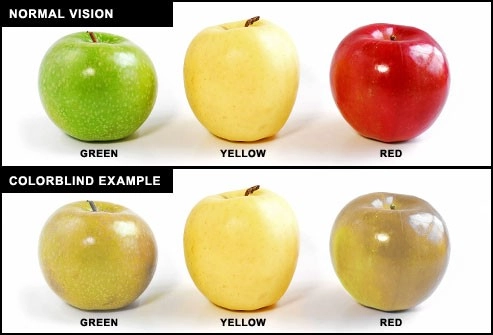
Color blindness is often misunderstood. What does color blind mean? Contrary to popular belief, color blindness is not total blindness—it is a color deficiency that affects the way you perceive certain colors. If you’re colorblind, what color is green? Many people with red-green color blindness see green differently, sometimes as brownish or grayish. Similarly, what does red look like to a colorblind person? Red may appear faded or dull.
Understanding Red-Green Color Blindness
The most common form of color blindness is red-green blindness. What does red and green look like to a colorblind person? Reds and greens may appear very similar, making it difficult to distinguish ripe fruits, traffic lights, or colored signs. How do red green colorblind people see? Their perception of red and green is altered because their cone cells in the retina do not process these wavelengths normally.
Red-green color blindness affects men more frequently than women. According to Prevent Blindness America, approximately 8% of males and less than 1% of females have some form of color deficiency. What is red green blindness? It is an inherited condition where the red and green cones do not function correctly.
How Color Blindness Works
The retina has two types of light-sensitive cells called rods and cones. Rods help with night vision in low light, while cones are responsible for color discrimination in daylight. Humans have three types of cones:
- Red cones – perceive red light
- Green cones – perceive green light
- Blue cones – perceive blue light
What does green look like to colorblind people? When the green cones are deficient, green may appear muted, beige, or grayish. Your brain interprets the signals from all cones to produce the colors you see. When red and blue cones are stimulated together, you perceive purple.
Other Types of Color Deficiency
Although red-green deficiency is most common, some people have difficulty seeing blue and yellow hues. This type is rarer and affects men and women equally. Most color blind people can see colors, but some colors appear washed out or are confused with others depending on the defect.
Can colorblind people see red? Yes, but it may look different from what someone with normal vision perceives. Understanding color deficiency vs color blindness is important: “color deficiency” is often a more accurate term for most inherited cases.
Lifelong Condition and When to See a Doctor
People are born with color blindness, and the condition typically does not change over a lifetime. If you develop color vision problems later in life, you should call a doctor. Sudden or gradual color loss may indicate underlying issues such as cataracts or other eye conditions.